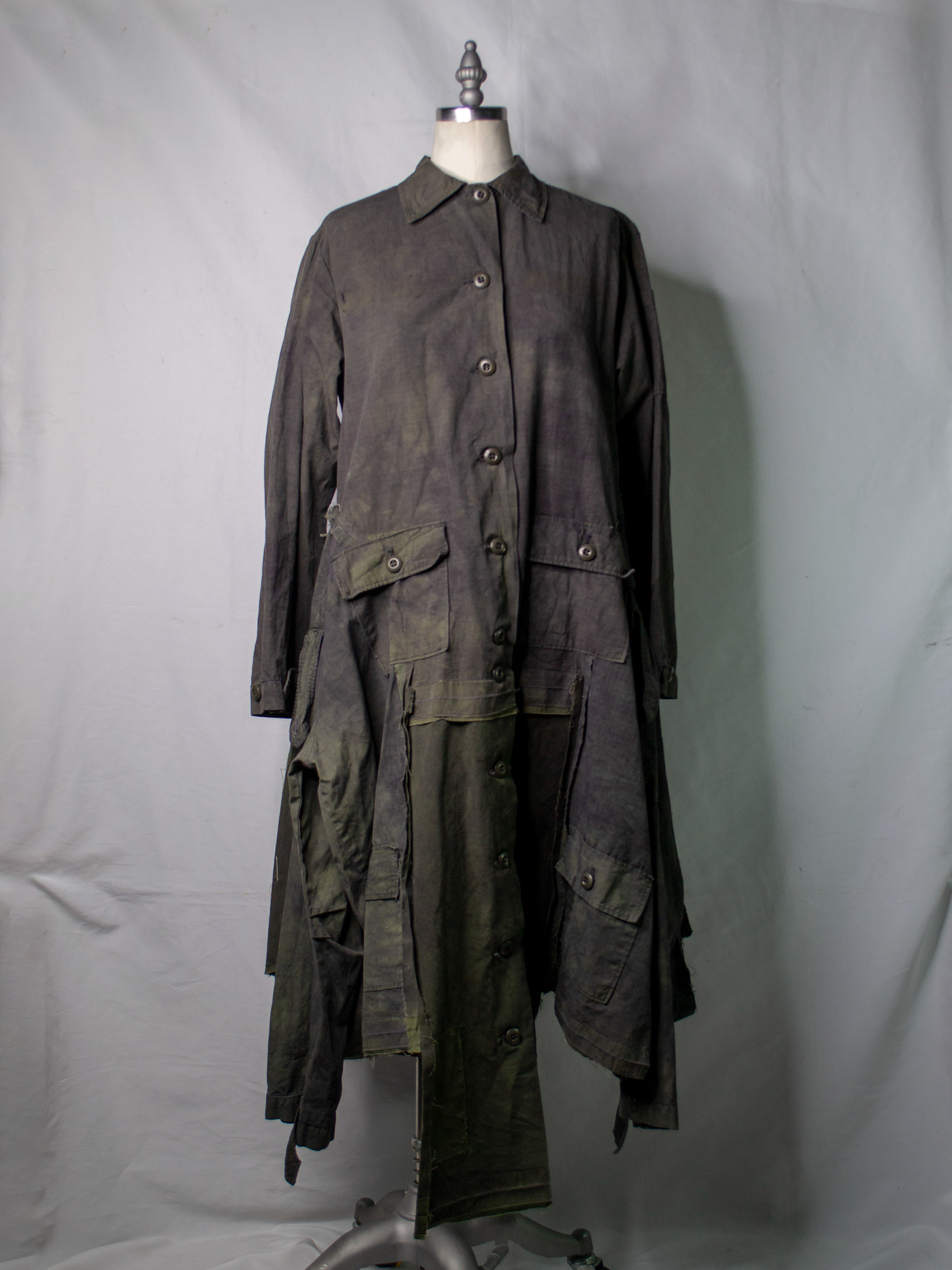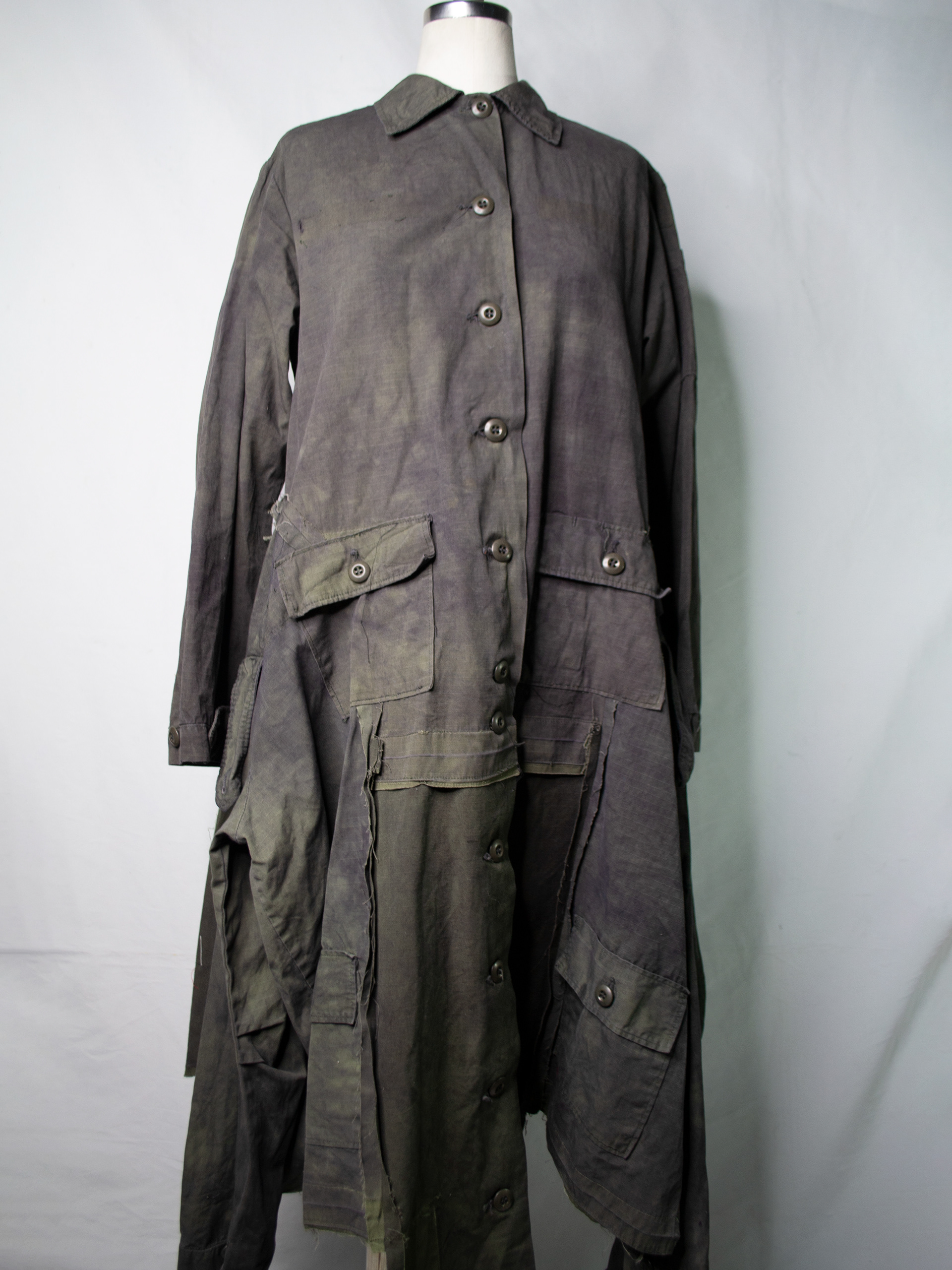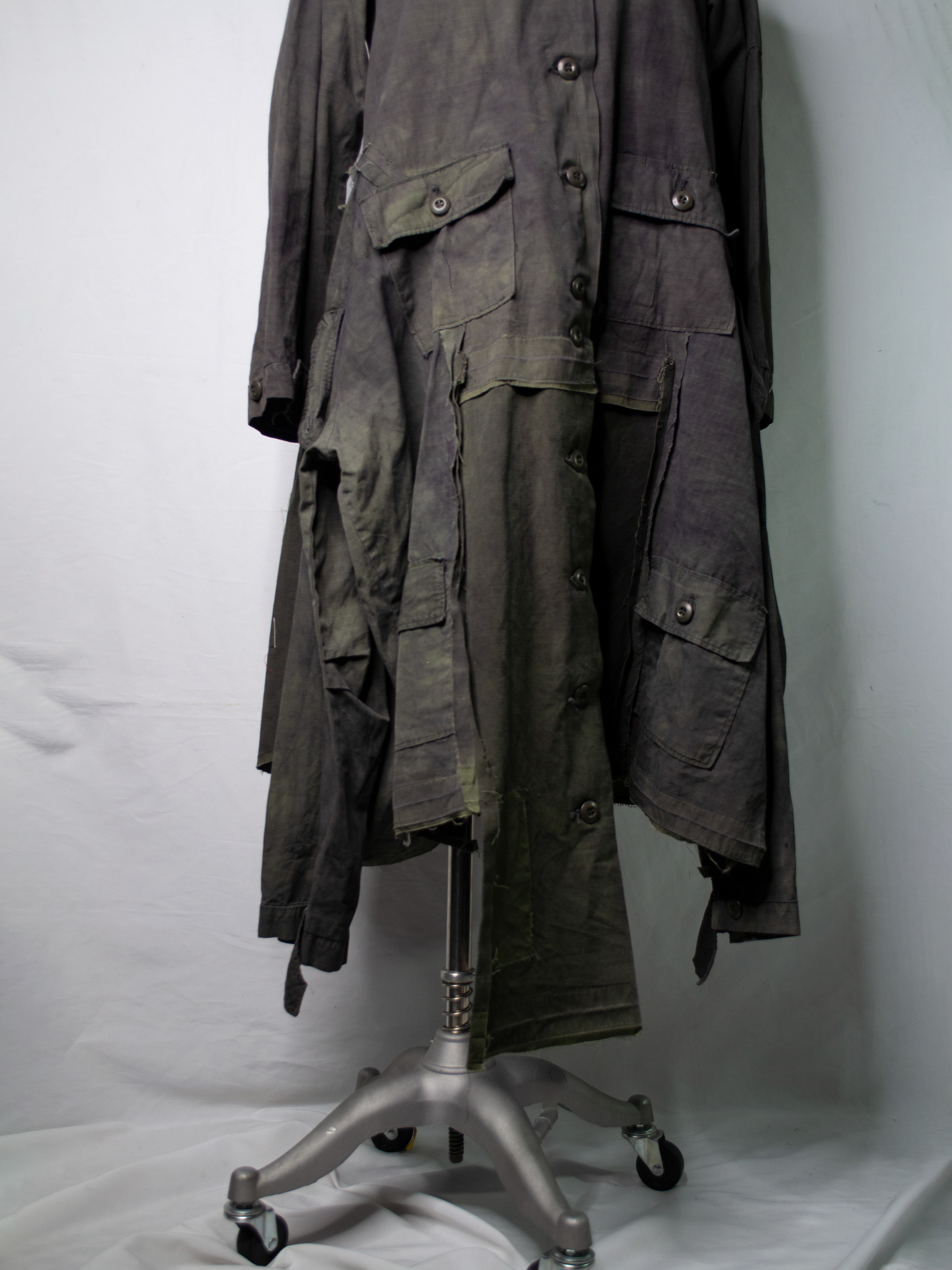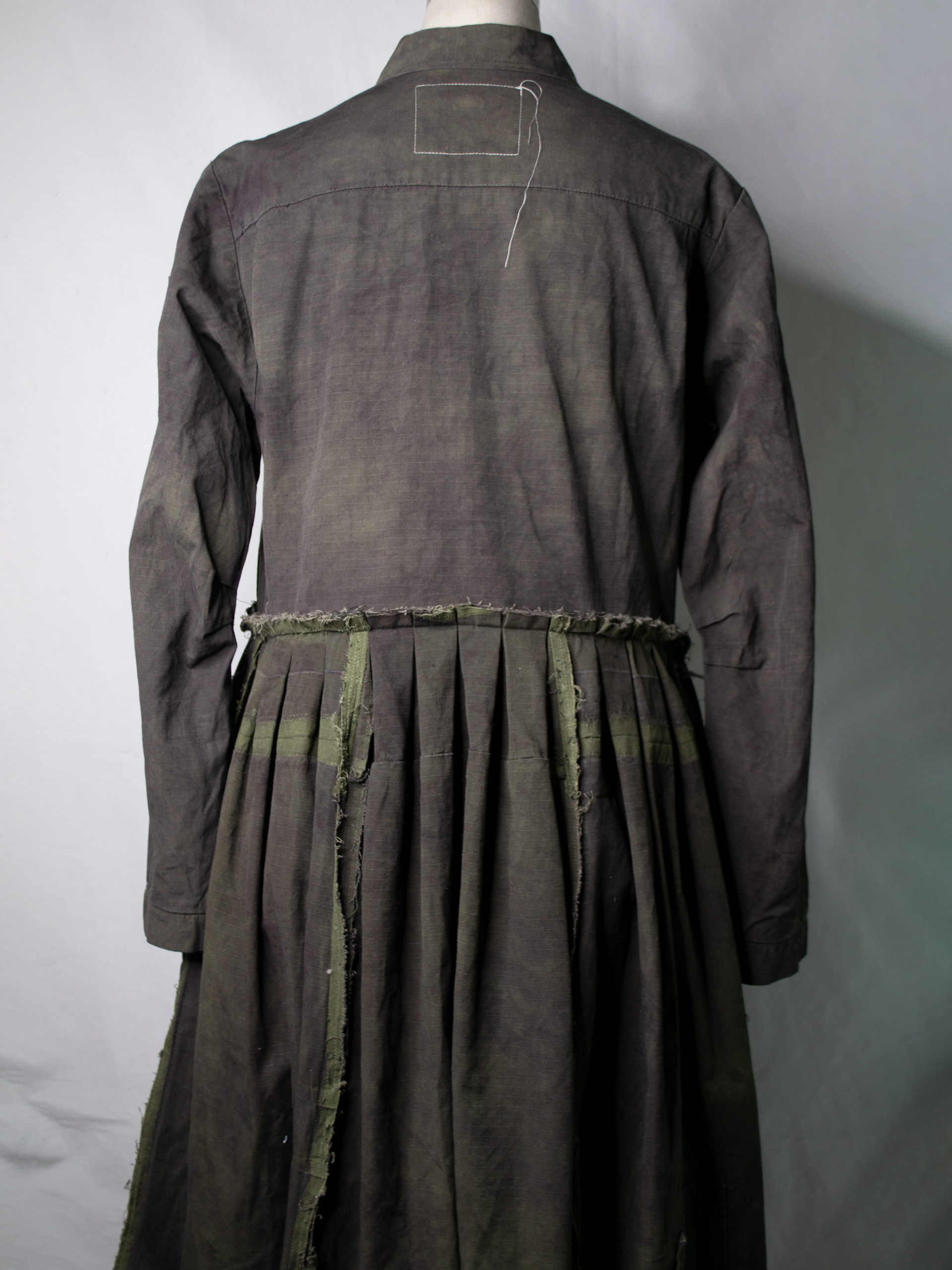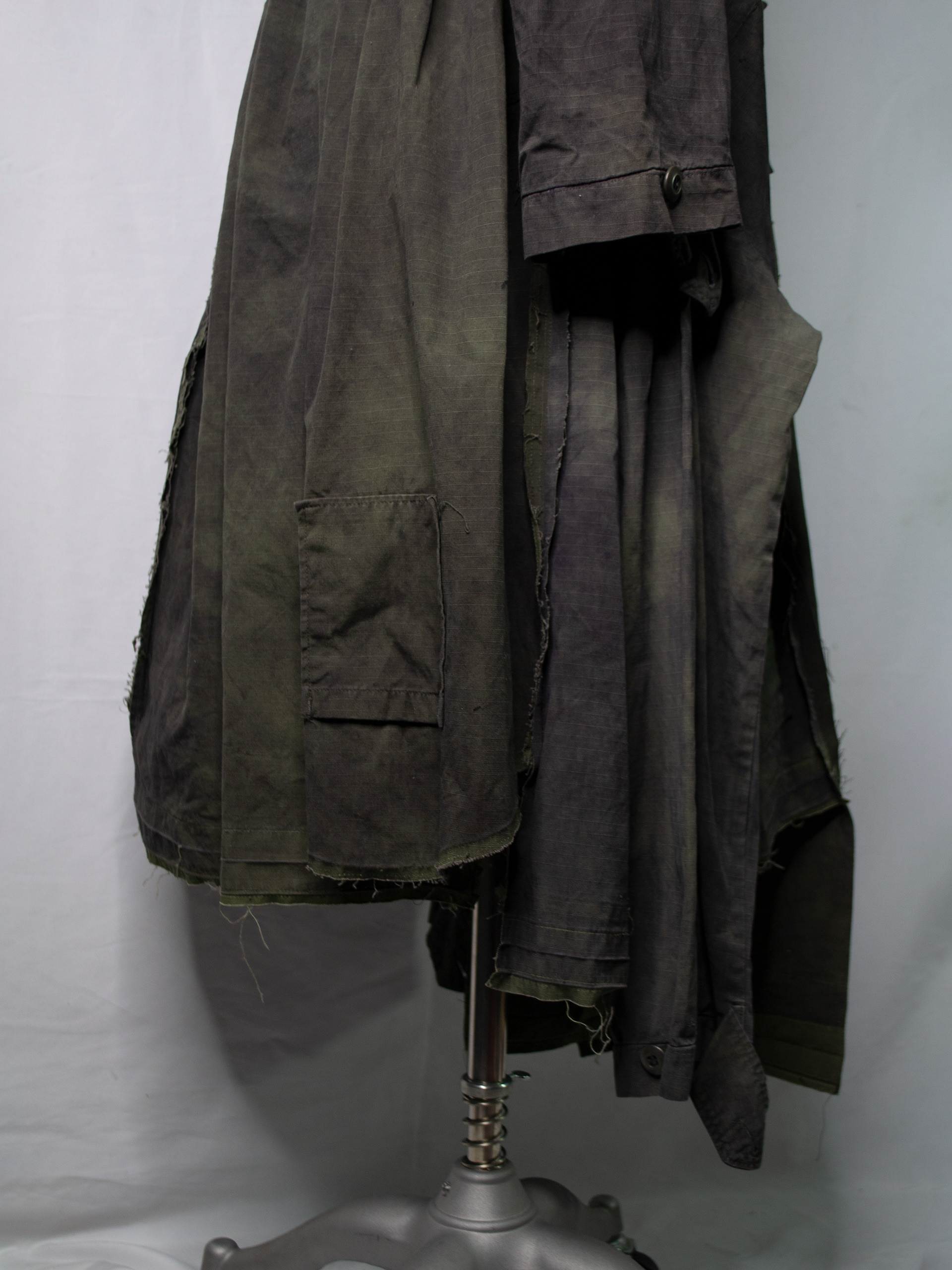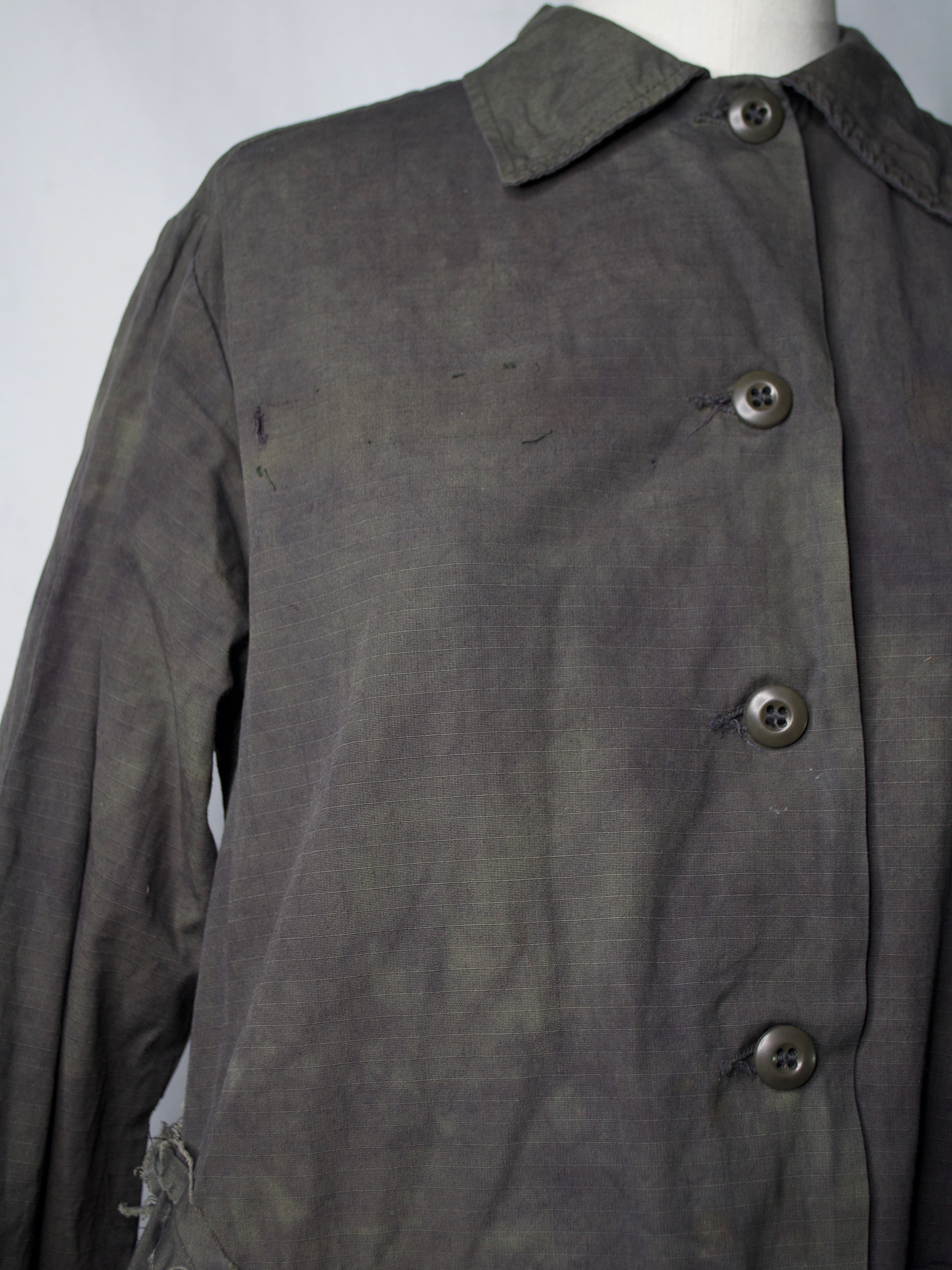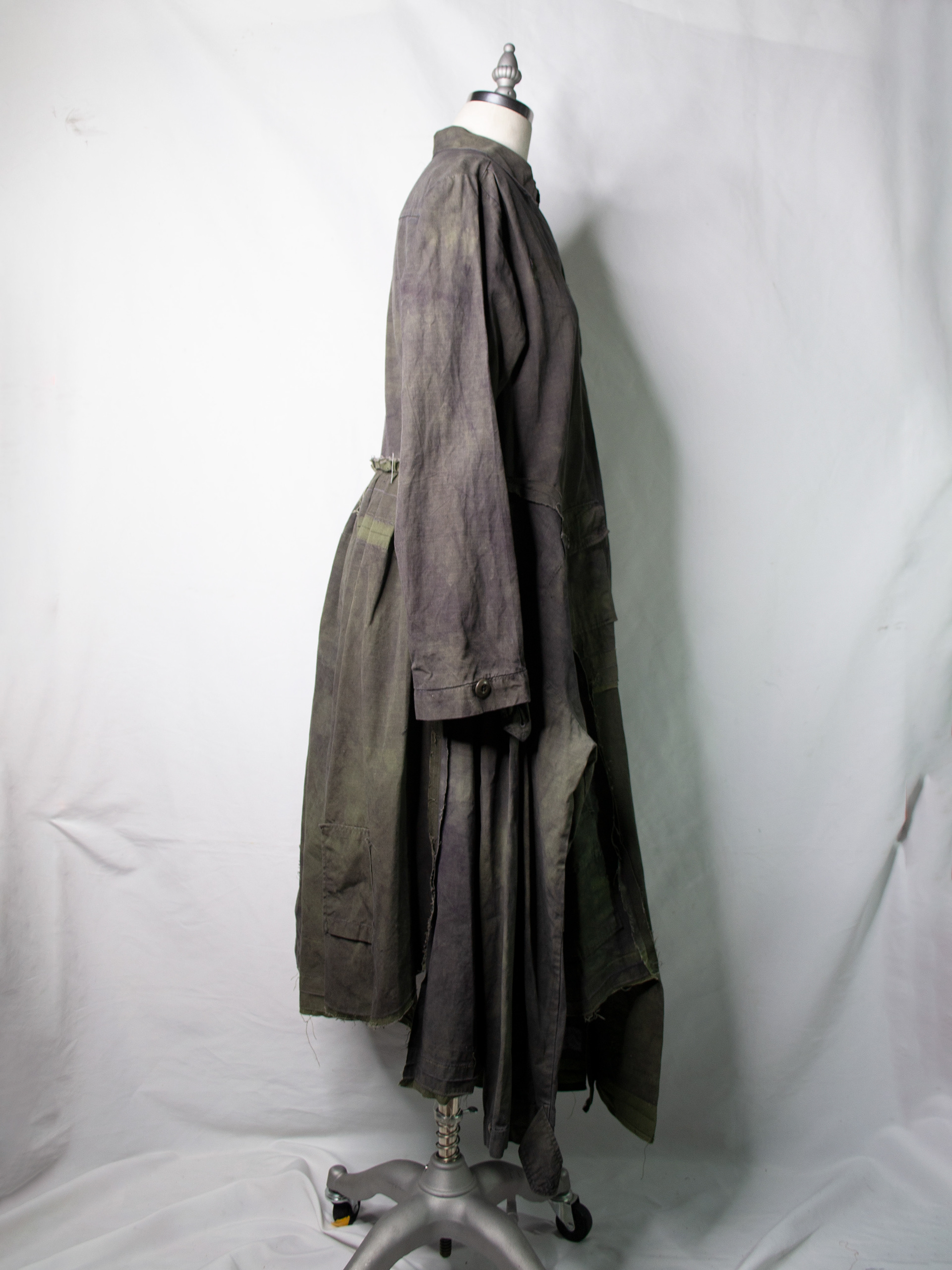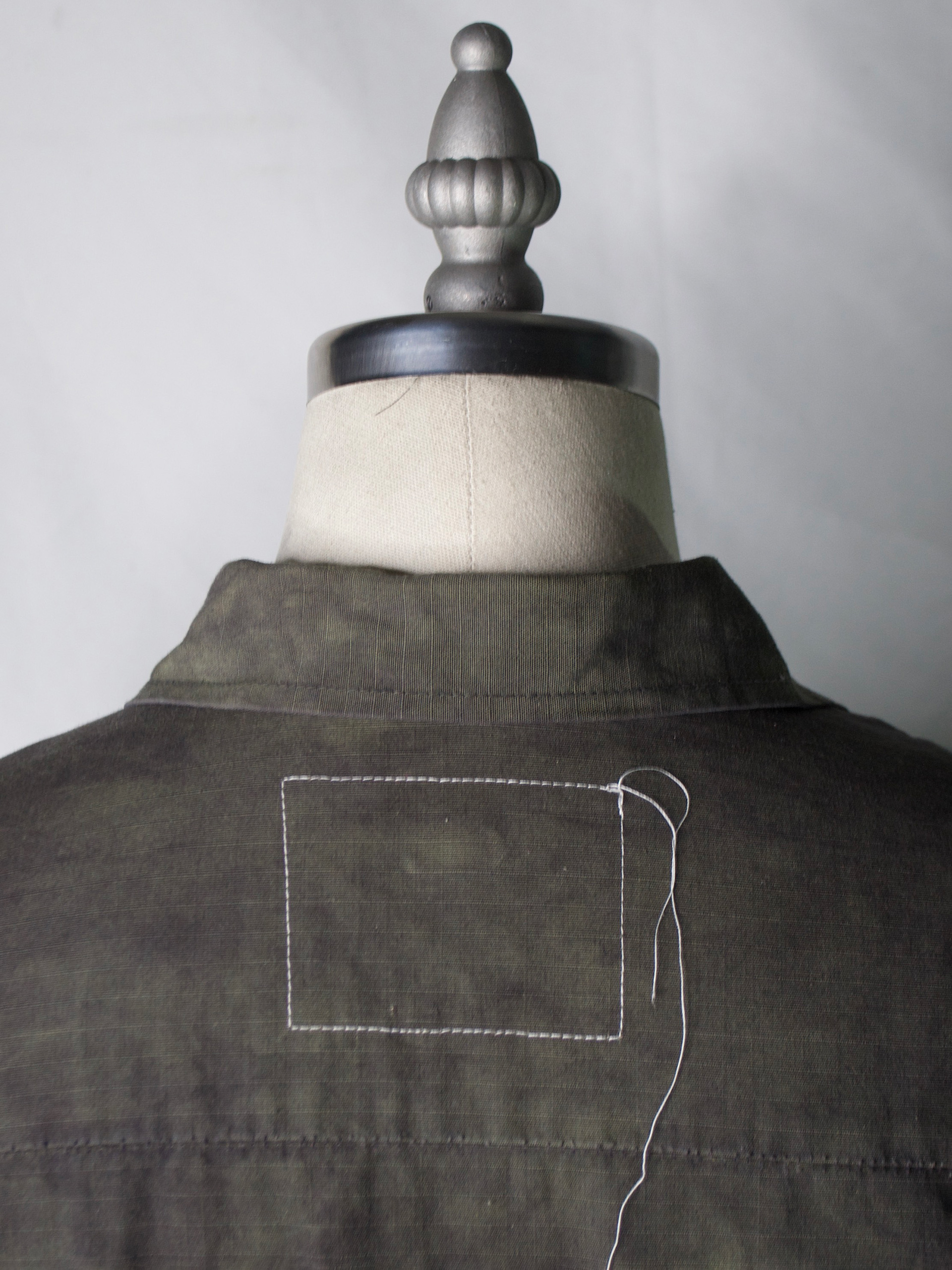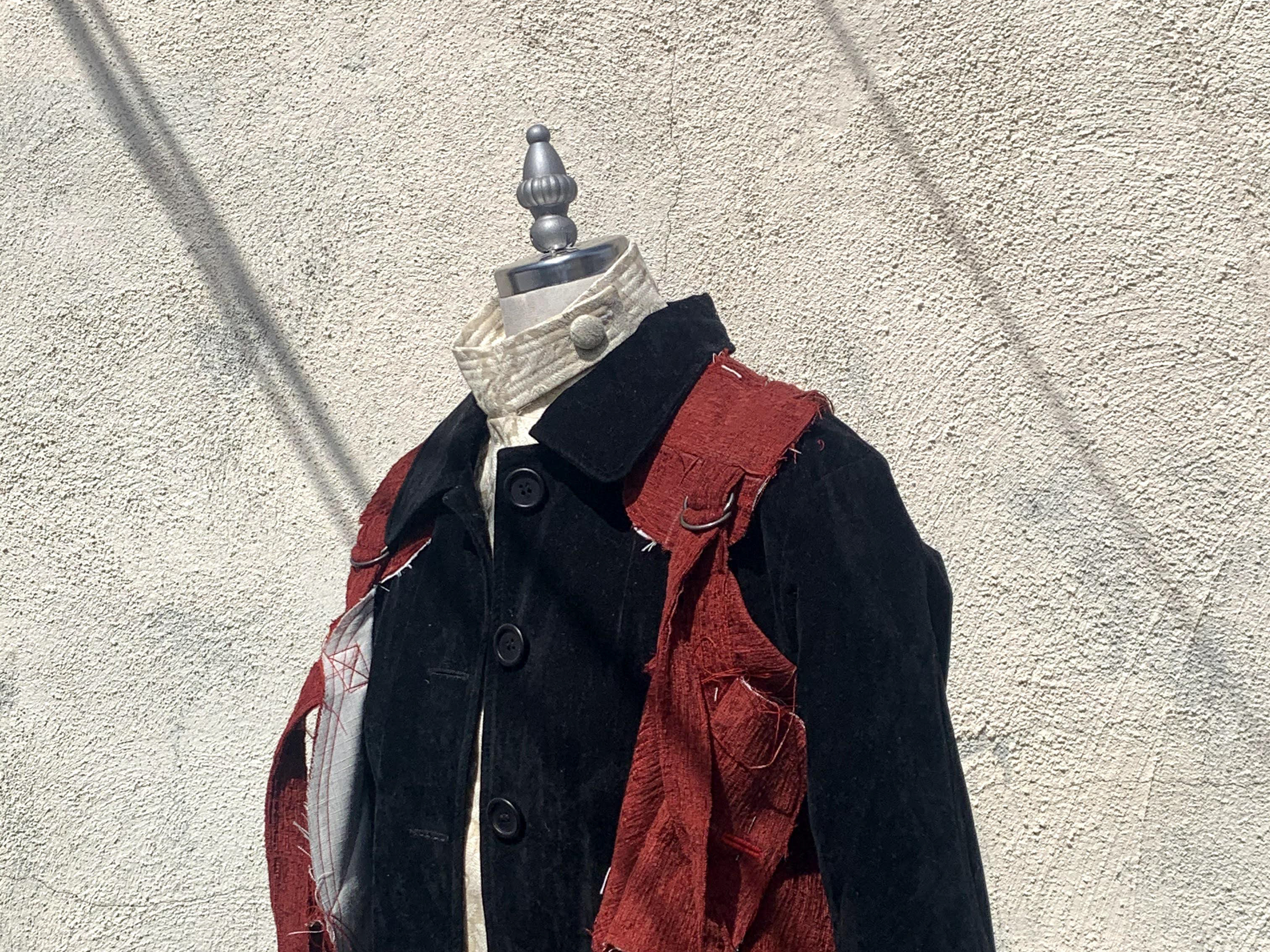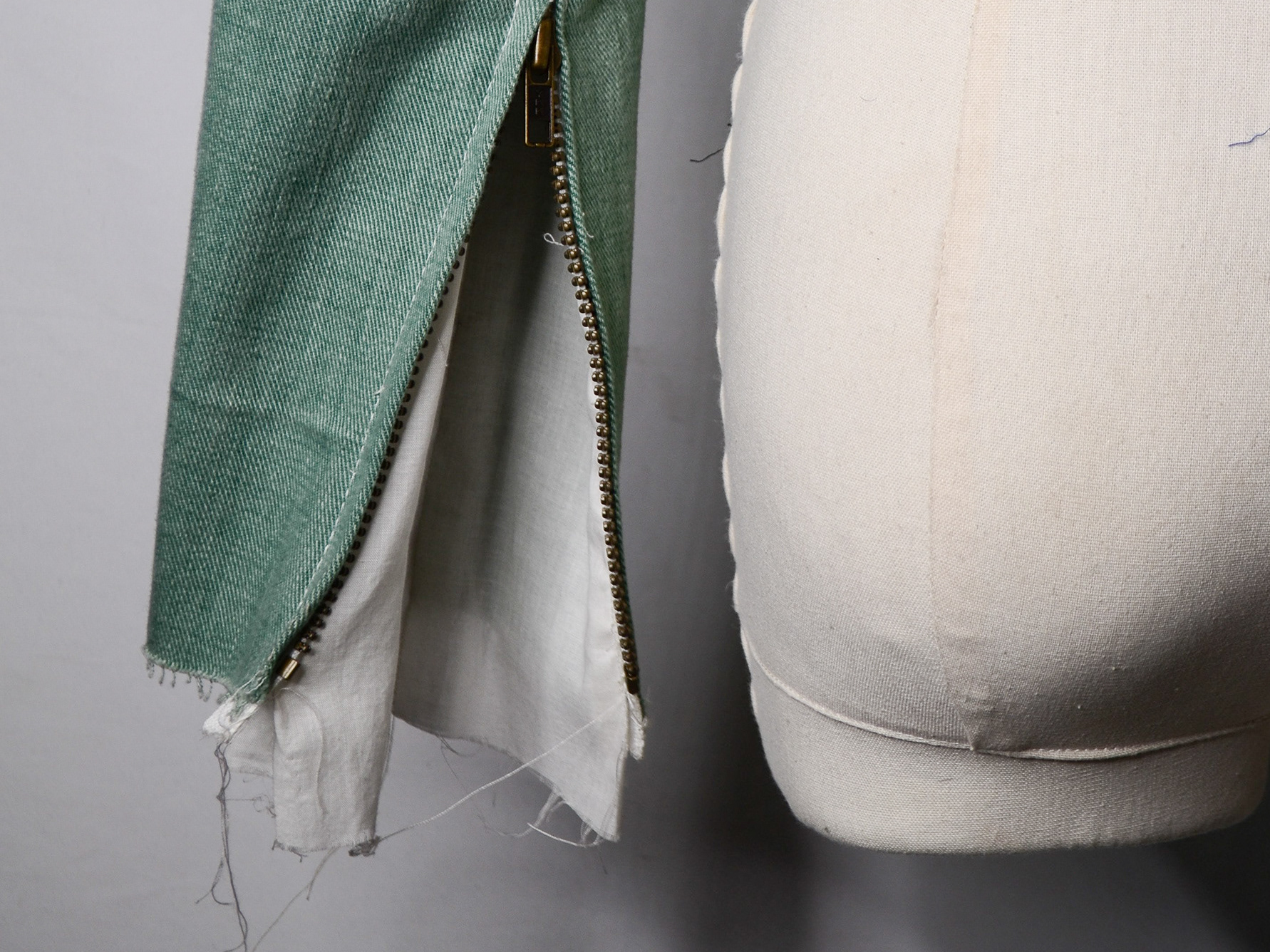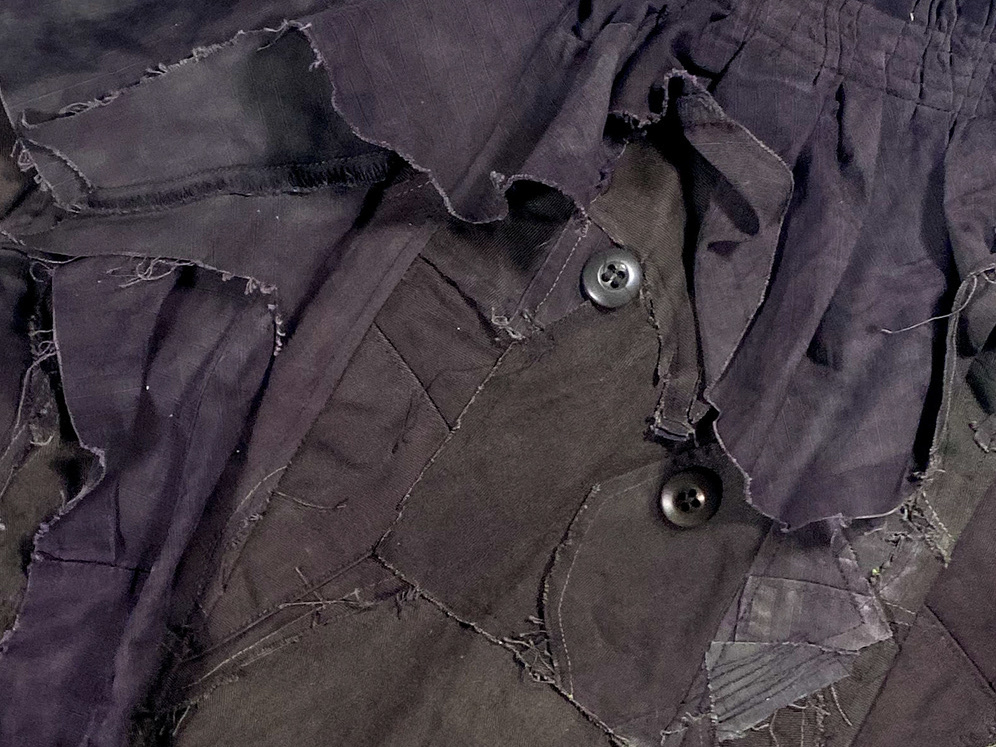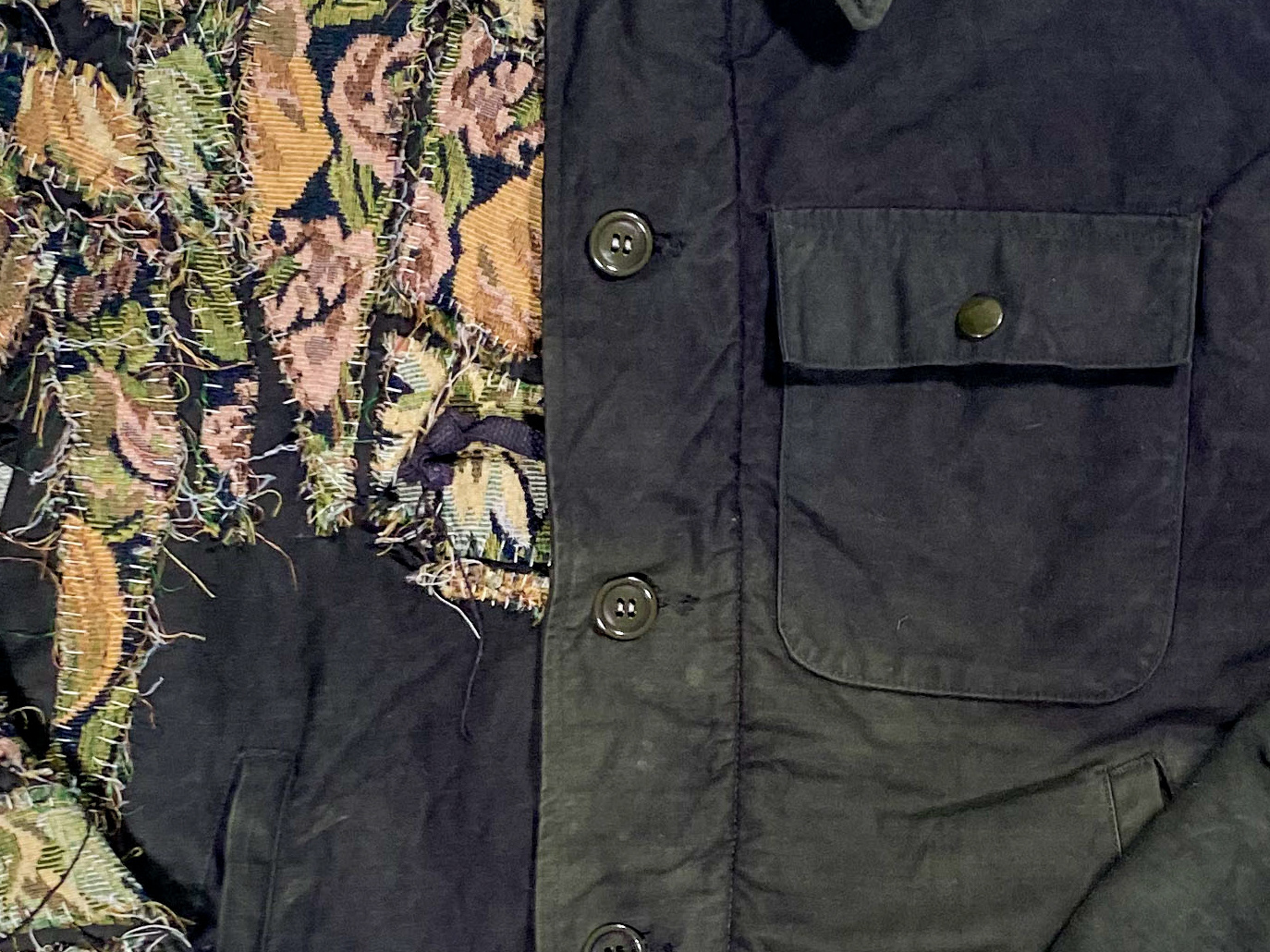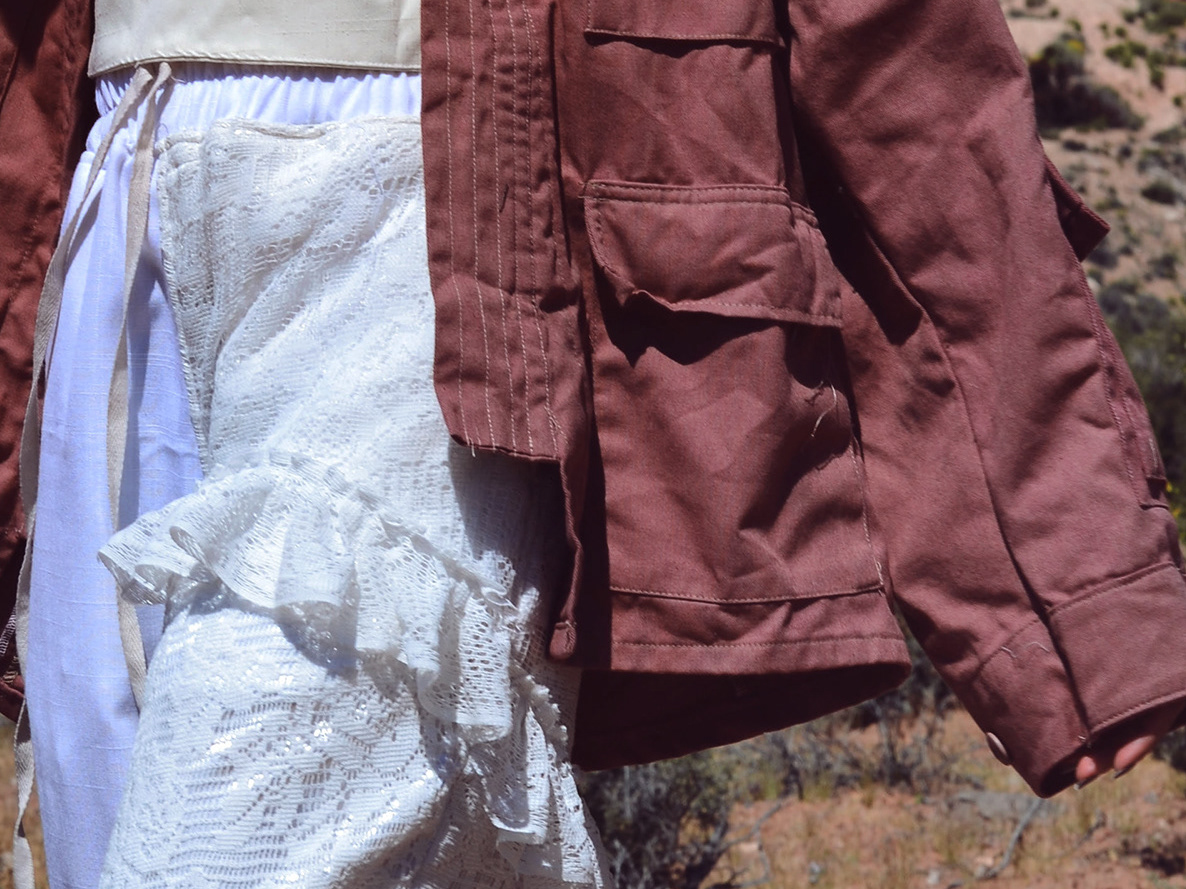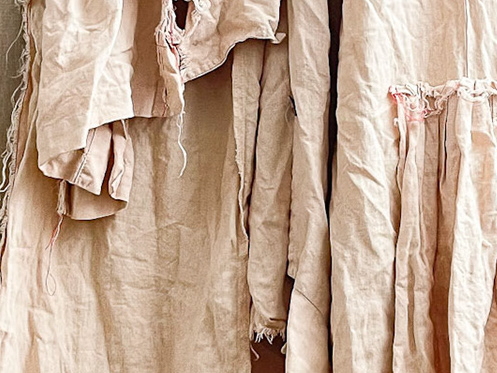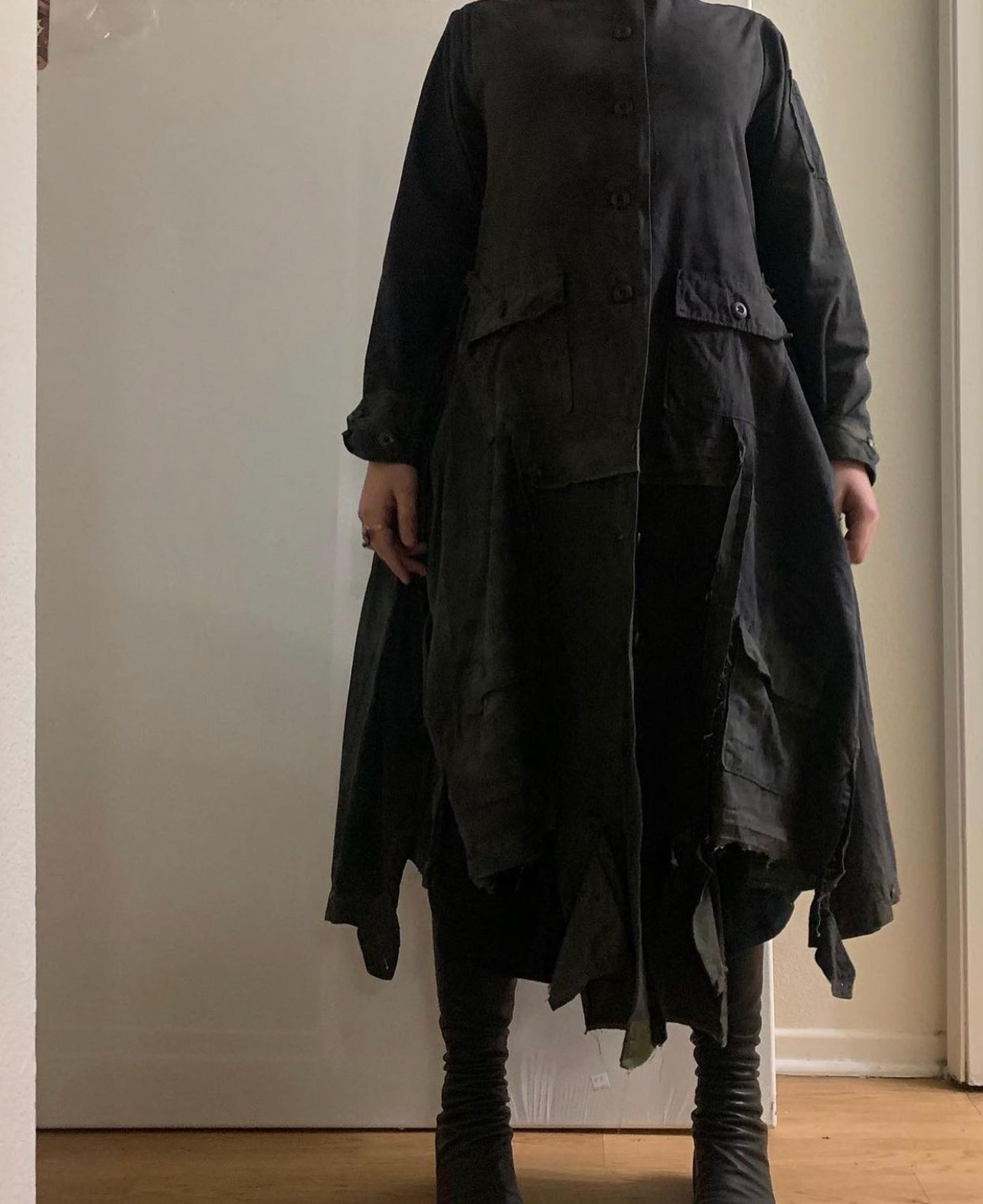
This four-arm dress is a conceptual garment constructed from mid- to late-20th-century military sateen field shirts, dating roughly from the 1960s through the 1980s. The original utilitarian garments are carefully reassembled to form an expanded silhouette, where excess sleeves become both structural and symbolic elements. The resulting form challenges standard proportions while remaining grounded in the practical language of military clothing.
The fabric was treated through a static over-dye process using extract from the Mexican logwood tree. Rather than aiming for uniform color, the dye was allowed to settle unevenly across the surface, producing subtle variations in tone. These shifts in color emphasize the garment’s layered construction and highlight the history embedded in the reused materials, allowing age, wear, and process to remain visible.
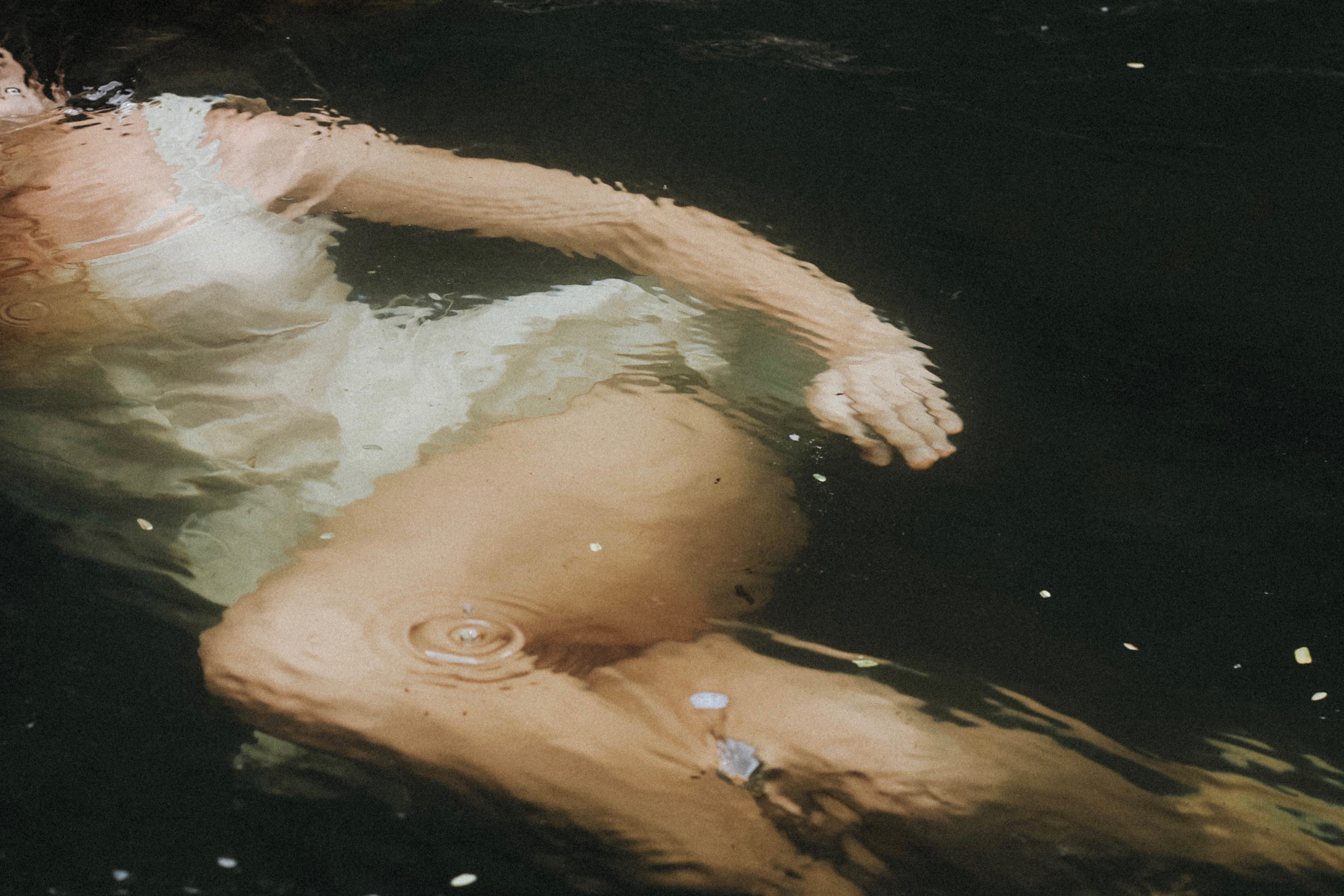
As a whole, the piece explores transformation—how garments designed for function and uniformity can be recontextualized into something expressive and singular. The four-arm structure suggests multiplicity and excess, while the natural dye process connects the work to older textile traditions. The dress is modeled by Nyke Shen-Ragasa, whose presence underscores the garment’s relationship to the body and its movement in space.